



If you've spent any time on real estate news sites or social media lately, you've probably seen the headlines. Words like "correction," "slowdown," and even "crash" get thrown around in a way that's designed to grab your attention — and it's leaving a lot of Colorado buyers and sellers wondering what's actually going on with home prices. The short answer? Prices are not crashing. But the longer answer matters a lot, especially if you're thinking about making a move in the Denver metro or the foothills communities this year.
Here's what the data actually shows — and what it means for you.
The Local Picture: Home Prices Are Genuinely Mixed Right Now
A lot of the confusion comes from the fact that home price trends are legitimately different depending on where you look. Nationally, data from ResiClub and Zillow shows that roughly half of the largest metro markets are seeing year-over-year price increases, while the other half are seeing some softening. The problem is that online content — especially social media and click-bait articles — tends to zero in exclusively on the markets where prices are down. That creates a warped picture that doesn't reflect what's happening across the board.
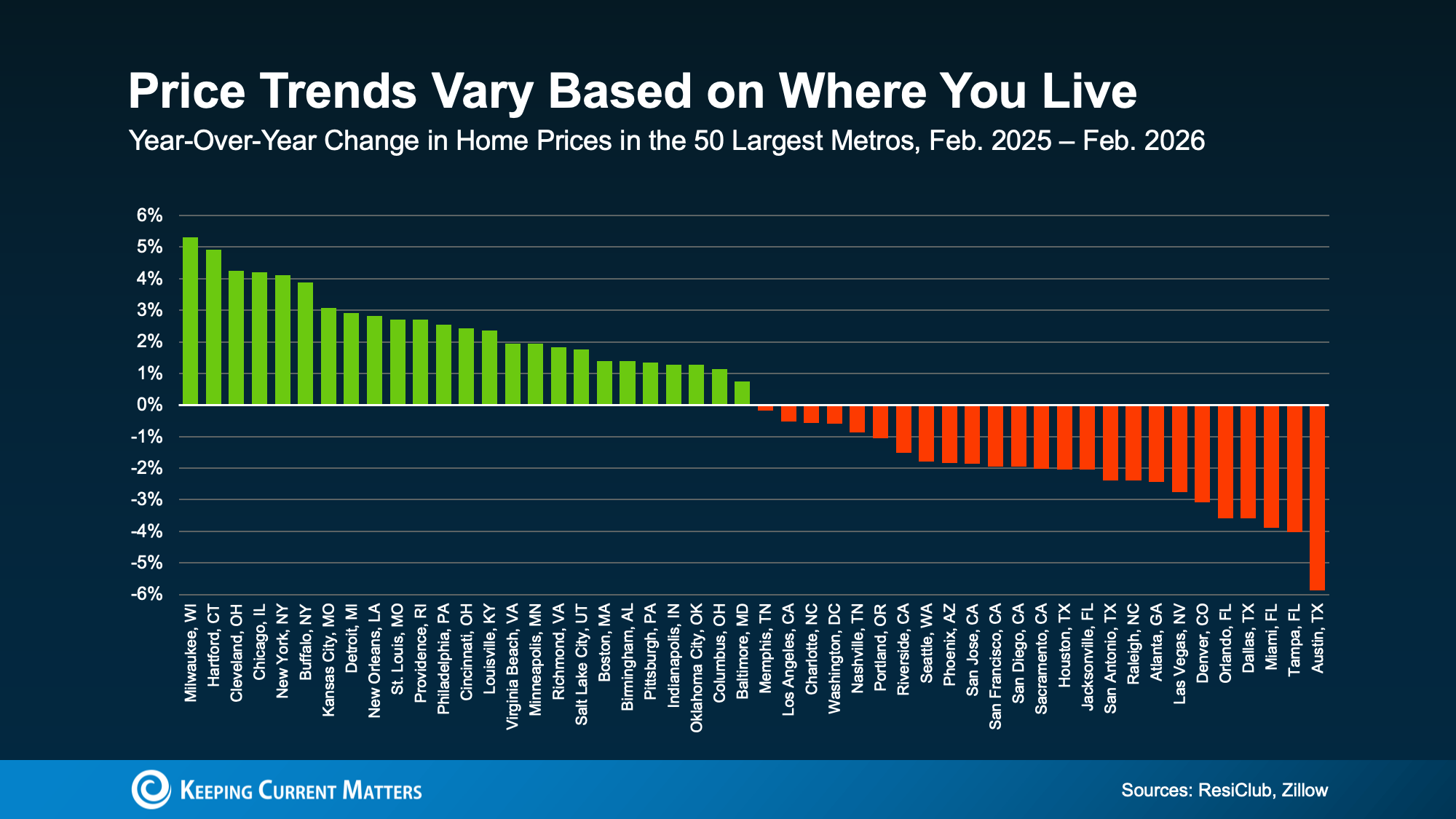
In Colorado's foothills communities — Evergreen, Morrison, Conifer, Pine, and Golden — we've seen a similar story play out on a hyper-local level. Certain price points and property types are holding firm while others have had to adjust. The $1M–$1.5M segment, in particular, has remained relatively stable because a higher percentage of buyers in that range are cash purchasers who are less affected by interest rate fluctuations. Meanwhile, some entry-level and mid-range properties in the broader Denver metro have experienced softer demand, which has led sellers to price more competitively. That's not a crash — it's a recalibration.
The takeaway here is that your specific situation — your neighborhood, your price range, your timing — matters far more than any national headline.
The National View: Slow and Steady, Not a Freefall
When you step back from individual metro markets and look at the national picture, home prices are still growing — just more slowly. According to Redfin, national home prices were up roughly 1% year-over-year as of February 2026. That's not the 10–15% annual appreciation we saw during the pandemic years, but it's also a far cry from a collapse.
What we're seeing right now is a market that's finding its footing after an unusually rapid run-up in values. During 2020–2022, prices in many Colorado communities — including Arvada, Littleton, and Jefferson County — climbed at a pace that was simply unsustainable long-term. Some of the softening happening in select markets today is a direct result of prices that stretched too far, too fast. A healthy market corrects for that. It doesn't implode.
For context: a true housing crash — like 2008 — involves widespread price declines across the entire country, typically driven by a wave of foreclosures and a collapse in lending standards. None of those conditions exist today. Inventory remains constrained, lending standards are far tighter than they were pre-2008, and underlying demand is supported by demographics (millennials aging into peak homebuying years). Colorado's population growth and job market continue to underpin long-term housing demand in the region.
What the Experts Expect: Growth Through 2030
Fannie Mae recently surveyed more than 100 housing market economists and researchers to gauge where they expect national prices to go over the next five years. The consensus is clear: moderate, consistent growth through at least 2030.
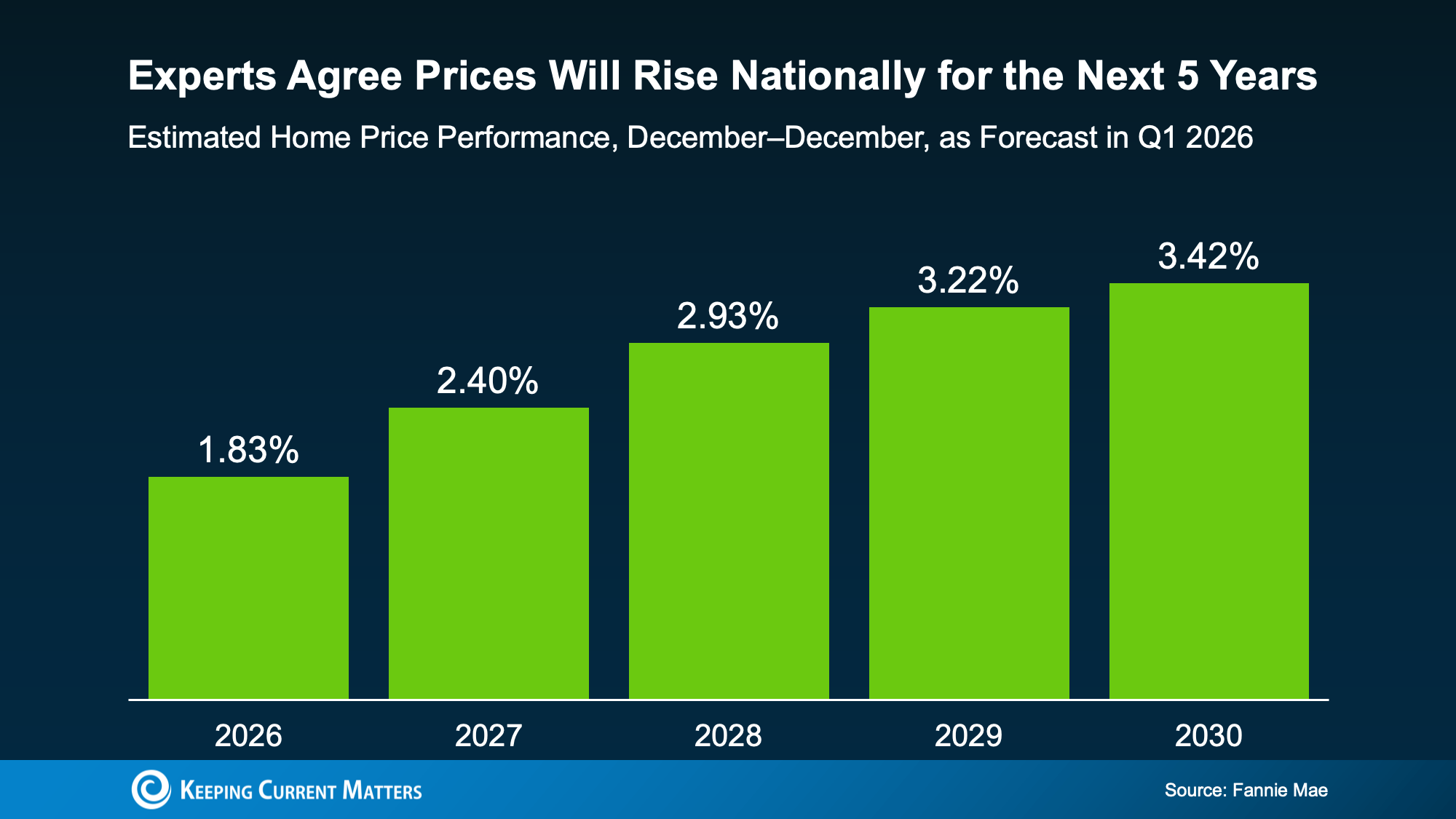
The growth isn't expected to be dramatic — particularly in 2026 — but the direction is consistent. As Daryl Fairweather, Chief Economist at Redfin, put it: prices rising gradually over time is actually what a healthy housing market looks like. It's not a problem to be solved. Colorado markets are broadly expected to follow that national trend, supported by continued in-migration, limited buildable land in foothills communities, and a diversified regional economy.
Perhaps most telling: that same Fannie Mae survey found that 85% of experts believe the markets currently experiencing mild price declines will return to positive price growth before the end of 2027. So even in the places where things have cooled, most economists expect a rebound — not a prolonged downturn.
What This Means If You're Thinking About Buying or Selling in Colorado
If you're a buyer watching from the sidelines, this is worth paying attention to: the window of slightly more negotiating room and reduced competition that exists in some price ranges right now may not last. Prices are expected to keep climbing, and once mortgage rates ease further, more buyers will re-enter the market. Waiting for a crash that isn't coming could mean paying more later — or competing with far more people for the same properties.
If you're a seller — especially in Evergreen, Morrison, Golden, or the broader Jefferson County foothills — the market still rewards well-priced, well-prepared homes. The days of overpricing and watching offers roll in are behind us, but accurately priced properties are still selling. The difference between a smooth transaction and a listing that lingers often comes down to strategy, not market conditions.
For both buyers and sellers, the most important thing you can do is focus on your specific market — not the national narrative. What's happening in Arvada right now is different from what's happening in Conifer or Littleton. Understanding the nuance in your neighborhood is how you make a smart decision.
Frequently Asked Questions
Are home prices dropping in the Denver metro right now?
It depends on the specific area and price range. Some segments of the Denver metro have seen modest price softening, particularly in entry-level and mid-range price points where buyer demand has pulled back due to affordability constraints. However, nationally, prices are still up about 1% year-over-year as of early 2026, and higher-end communities like those in Jefferson County and the foothills have remained relatively stable.
Is the Colorado housing market going to crash?
The data doesn't support that scenario. A housing crash like 2008 requires widespread foreclosures, loose lending standards, and national price declines — none of which are present today. Over 100 housing economists surveyed by Fannie Mae expect moderate national price growth through 2030. Colorado's limited inventory, population growth, and strong job market add further support to long-term values.
Is now a good time to sell a home in Colorado?
For the right seller, yes. Well-priced homes in desirable Colorado communities are still selling, particularly in the $1M+ segment where cash buyers remain active. The key is accurate pricing and strong presentation. Overpriced listings sit — but homes that are priced to reflect current market conditions are moving. A local market analysis from an experienced agent is the best starting point.
Should I wait for home prices to drop before buying in Colorado?
That's a strategy that carries real risk. Most expert forecasts point to continued price growth nationally and in Colorado through 2030. Even in markets that have seen mild softening, 85% of economists expect a return to positive price growth by end of 2027. Waiting for a dramatic price drop means potentially facing higher prices, higher competition, and — if rates drop — a more crowded market.
Bottom Line
The housing market isn't crashing. It's shifting — and there's a meaningful difference between those two things. Some markets are cooling, some are still climbing, and the national trend is steady, moderate growth. The headlines that dominate social media are telling only part of the story.
What matters most right now is knowing what's actually happening in your specific corner of Colorado — whether that's Golden, Arvada, Morrison, Evergreen, or anywhere in between. That local context is what turns confusing data into a clear, confident decision.
Ready to Talk About Your Move in Colorado?
Whether you're thinking about buying, selling, or just want a straight answer about what the market looks like right now, Tim and Sandy Jones are here to help — no pressure, no sales pitch.
📧 [email protected]
📞 (720) 314-8462 — call or text anytime
📅 Schedule a free 15-minute call
Check out this article next