


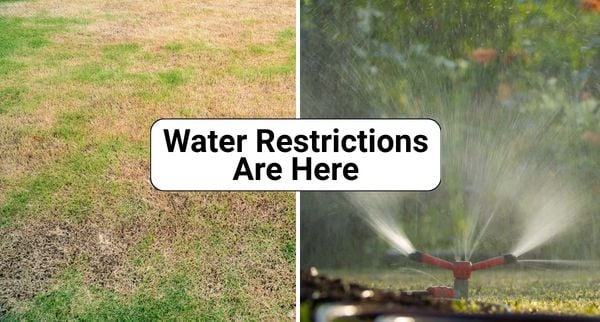
Colorado water restrictions are reshaping what buyers want in a home — and if you own property in the Jefferson County foothills, this story affects your home's value right now. Denver Water implemented Stage 1 Drought Restrictions this spring, limiting 1.5 million customers to twice-weekly outdoor watering. And the ripple effects are being felt across Conifer, Evergreen, Morrison, Golden, and the wider Front Range foothills.
What the Restrictions Actually Say
Denver Water's Stage 1 restrictions limit outdoor grass watering to twice per week. Residential addresses with even numbers can water Sundays and Thursdays. Odd-numbered addresses water Wednesdays and Saturdays. Watering is prohibited between 10 a.m. and 6 p.m. Drip irrigation and hand watering for trees, shrubs, and perennials remain allowed outside those hours.
Aurora follows with Level 1 restrictions starting April 7th. Thornton declared Stage 1 in March and is advising residents to hold off on turning on sprinkler systems until May 1st. Erie lifted its mandatory restrictions on April 1st but is asking residents to voluntarily limit irrigation to twice weekly.
The Xeriscape Surge — and What It Means for Home Values
Colorado's Turf Buyback program is breaking records in 2026. The state is paying homeowners $3 per square foot to remove traditional grass and replace it with native plants, gravel, and drought-tolerant groundcover. Demand from local landscaping companies for xeriscape conversions has surged significantly as a result.
The numbers make a compelling case. According to Colorado Water Wise, xeriscaped landscapes typically use 50 to 75% less water than conventional bluegrass lawns — a meaningful reduction in monthly utility costs. A well-designed xeriscape can increase property values by up to 15%. The estimated return on investment for a full xeriscape conversion runs between 50 and 200%, with typical project costs ranging from $5,000 to $20,000.
Modern xeriscape doesn't look like an afterthought. Native plants, ornamental grasses, flagstone, and drought-tolerant groundcover installed thoughtfully can be striking — and in the current market, they signal a home that's been maintained intelligently.
For Foothills Sellers: Water-Wise Landscaping Is Now a Selling Feature
If you're thinking about listing your foothills home this spring, water-wise landscaping is a legitimate talking point — not just an aesthetic preference. Buyers who have been watching Colorado's water situation know that a property with low-water landscaping and efficient irrigation carries lower carrying costs and less seasonal maintenance. That matters to serious buyers.
If your yard is still primarily bluegrass turf, it's worth having a conversation with a landscaper about what a partial xeriscape conversion would cost and whether the timing makes sense before you list. Colorado's Turf Buyback program may offset a meaningful portion of that cost, and the curb appeal improvement can work in your favor during showings.
For Foothills Buyers: Ask About the Water Source
This is where foothills real estate gets genuinely different from suburban transactions, and where working with an agent who knows the market pays off. Water sources in Jefferson and Park County vary significantly from property to property — and the distinctions matter.
Municipal water means you're on a city or district system subject to restrictions like the ones Denver Water and Thornton have implemented. Well water means you're drawing from a private well — which may be exempt from municipal restrictions but comes with its own considerations around well permits, depth, flow rate, and maintenance. Irrigation rights are a separate issue entirely in Colorado, where water law is governed by the Prior Appropriation Doctrine — meaning the right to use water is tied to historical use, not land ownership.
Before you make an offer on a foothills property, understand the water source. Ask for the well permit if applicable, ask about the water district if it's municipal, and ask whether there are any irrigation rights associated with the land. These are not obscure questions — they're standard due diligence in this market.
The Bigger Picture for Foothills Homeowners
Colorado's water situation isn't a short-term news story. The state's population has grown significantly while water resources remain constrained by geography and climate. Stage 1 restrictions in spring 2026 reflect a structural reality that's been building for years. Homeowners who adapt early — through xeriscape conversions, smart irrigation systems, and water-wise planting — are positioning their properties ahead of a trend that's only going to become more relevant to buyers.
This is exactly the kind of local knowledge that makes a difference when you're buying or selling in the foothills. The market here has its own rules, its own water infrastructure, and its own set of considerations that don't apply the same way in the suburbs. Sandy and I have been navigating these details with clients since 2011. When you work with us, you get that context built in.
Watch Next
What does $900,000 actually buy you in Morrison, Colorado right now? That's our next video — subscribe to Jones Team Colorado on YouTube so you don't miss it.
Questions About Your Foothills Property?
Whether you're thinking about listing this spring, curious what your property is worth in the current market, or evaluating a foothills purchase — let's have a direct conversation about your specific situation.
- 📧 [email protected]
- 📞 (720) 314-8462 — call or text
- 📅 Schedule a free 15-minute call
Check out this article next